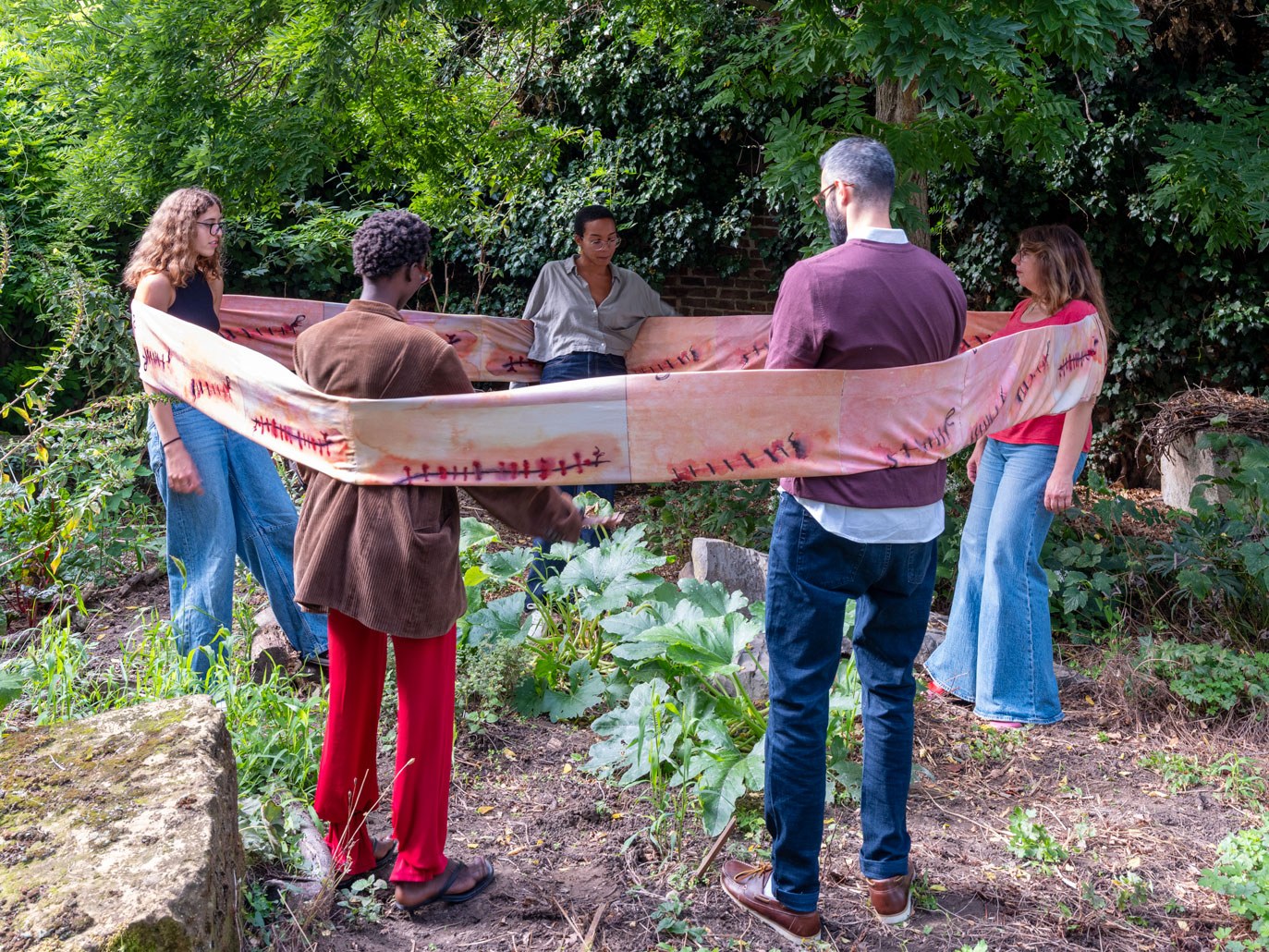
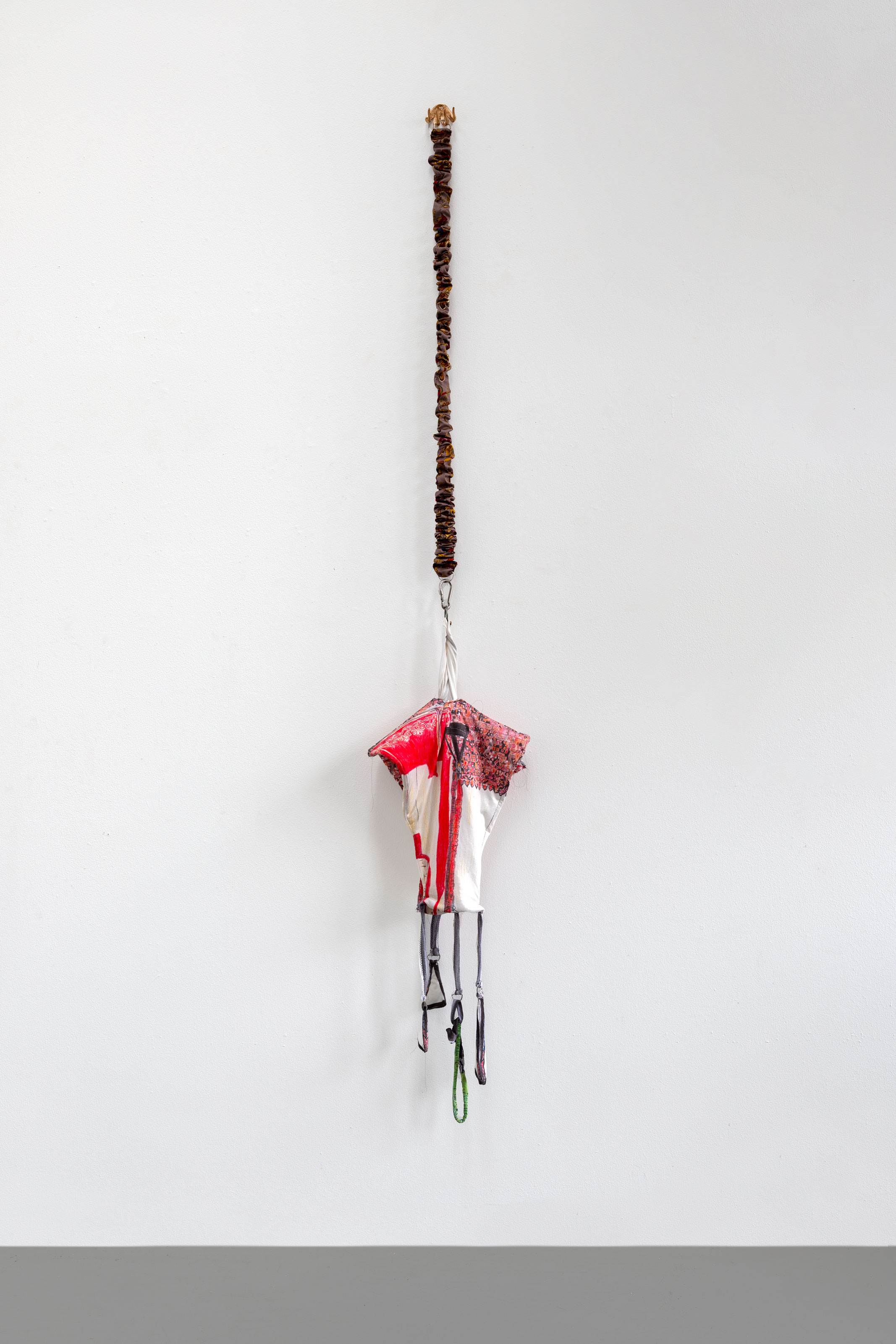
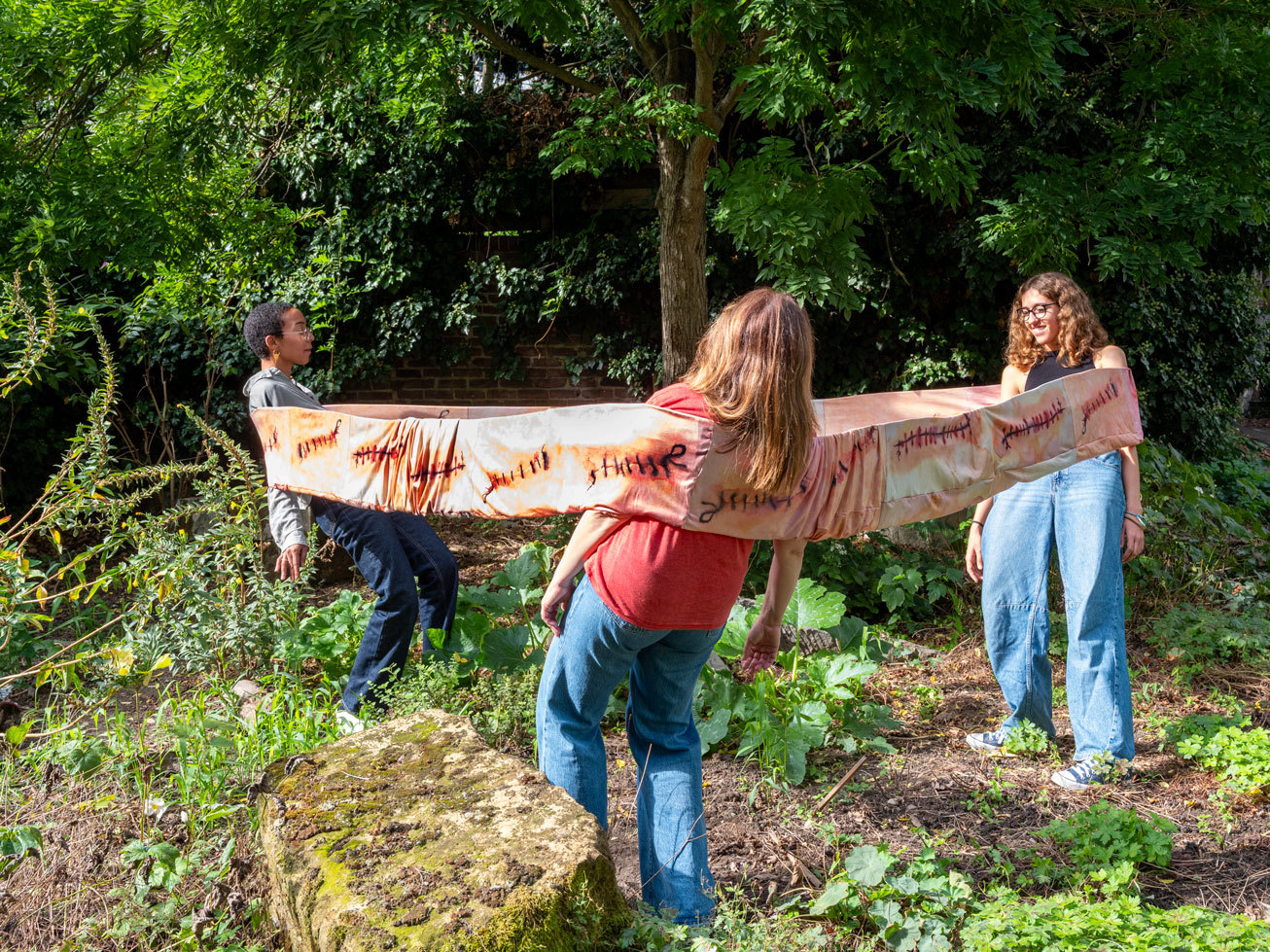
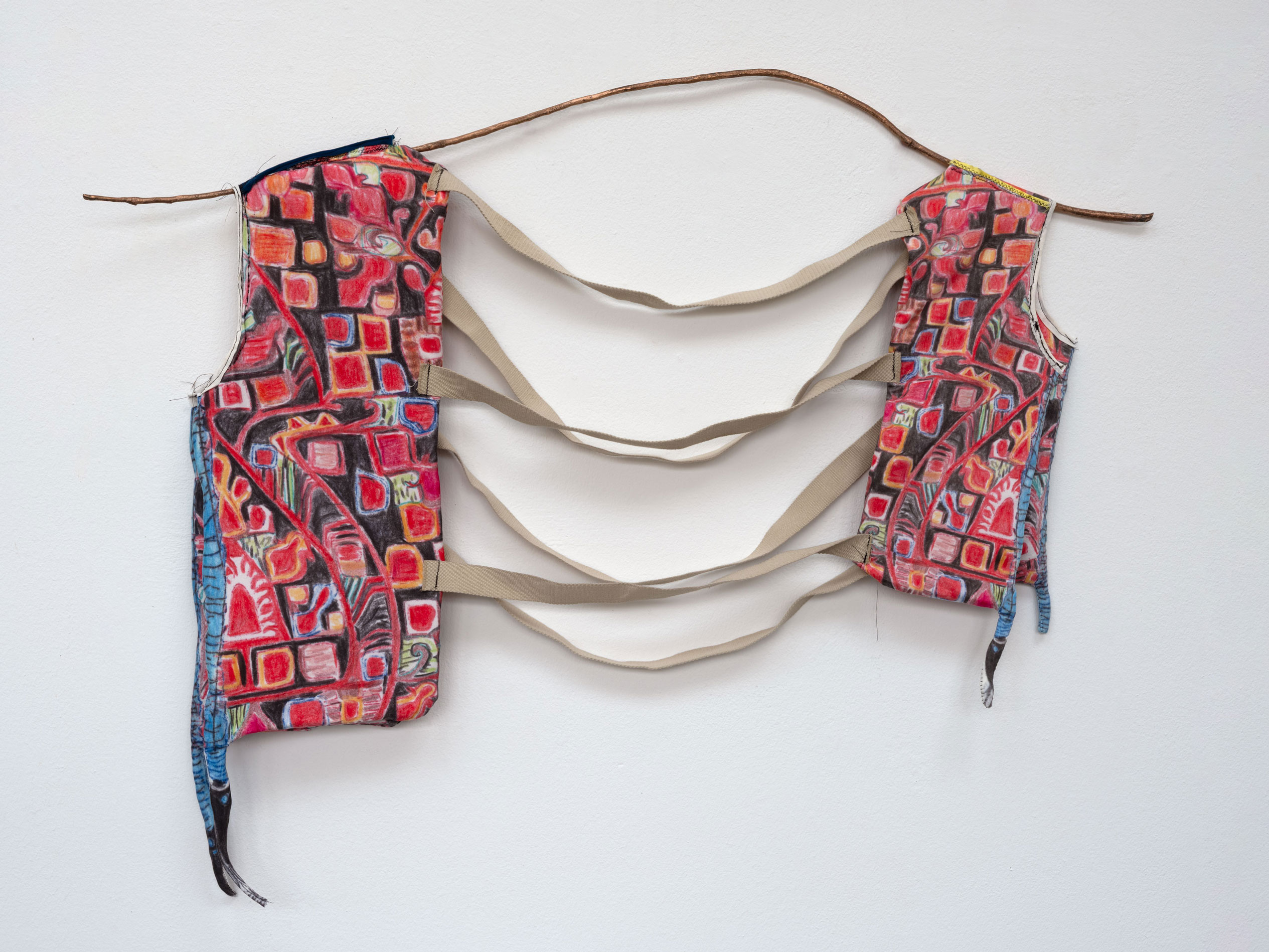
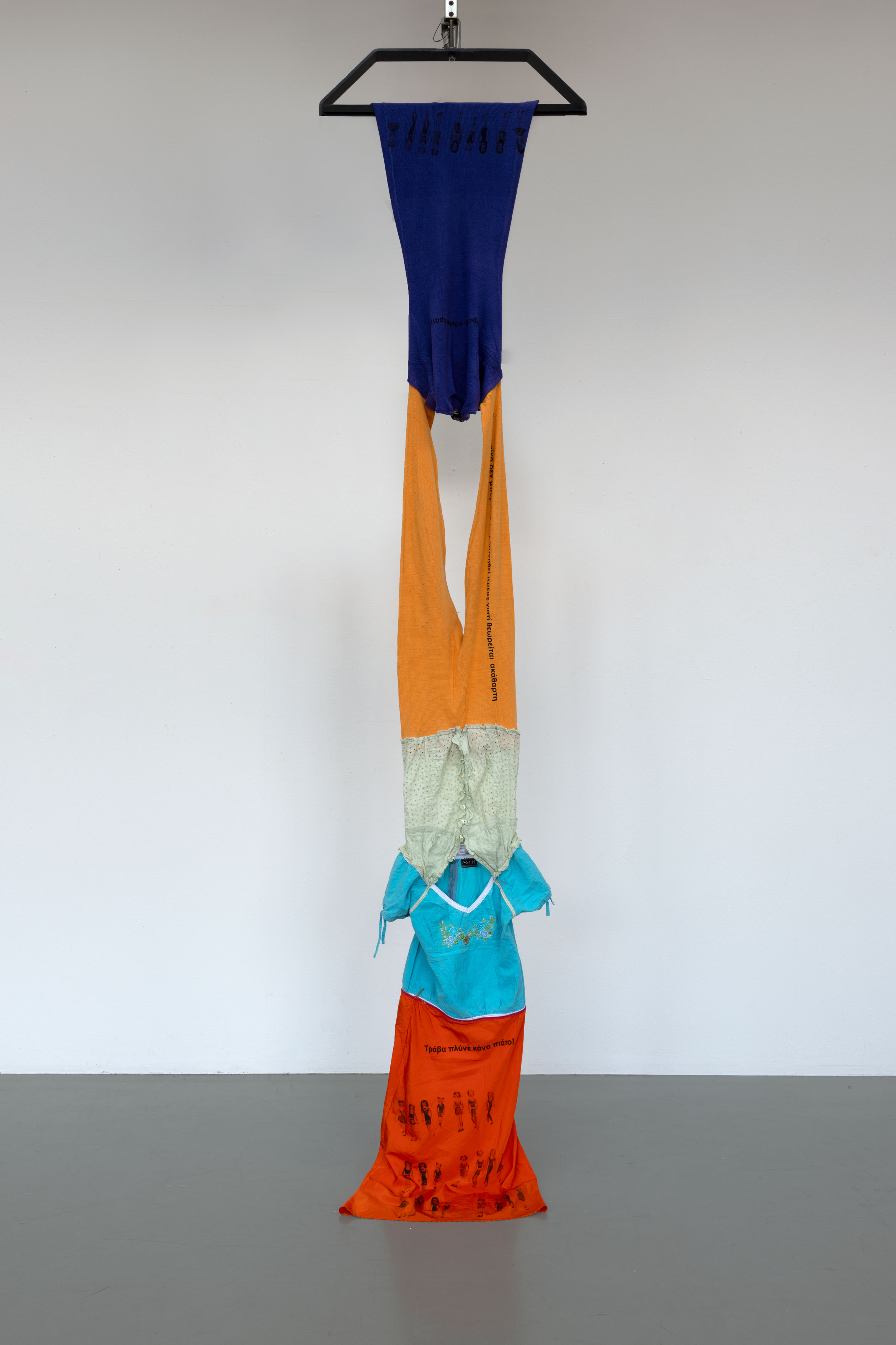
10.000 repetitions — all she had was time (2024–ongoing)
My recent body of work takes as a point of departure BODHI, a Suspension System
conceived by Pilates instructor Khita Hywat, who used it as a tool for bodily recovery
and healing: to re-acquire her spatial awareness following a car accident. By
interviewing her, I became fascinated by the analogies between rehabilitation processes following a brain injury and sewing and repairing clothing activities. In both cases, new connections and links are formed and enabled through the repetition of specific movements or actions.
Drawing on conversations with Hywat and neuroscientists Sara Garofalo and Maartje
de Jong, over the past year I have been working with drawings and soft sculptures
to explore the notion of making as a cognitive and mnemonic process, as well as to
think through how folkloric heritage can shape collective memory and recovery. These
attempts form part of 10,000 repetitions — all she had was time (2024–ongoing). I take
my own experiences as a starting point, to focus on how something that is damaged
can be repaired and transformed. I began using second-hand textiles and garments
to create sculptures resembling resistance bands that reference Hywat’s suspension
system.
Starting from my current works and exploring how they can be regarded as ‘memory
instruments’ that can be moved, re-used, activated by multiple people, I also imagine
working with specific groups and deepening such questions together, by creating
spaces (workshops, exhibitions, performances), where repetition functions as a
transformative force, with a focus on vulnerable social groups. I draw inspiration from the way in which areas of the brain work together to compensate for loss or injury.